











Metallography & Corrosion Evaluation — Scope & Benefits
Our lab performs a complete suite of microstructural, weld, coating, and corrosion evaluations to verify material integrity, diagnose failures, and qualify manufacturing procedures. Tests are executed using recognized practices (e.g., ASTM/ISO/IS as applicable), with traceable photos, measurements, and conclusions suitable for MDRs, qualifications (WPS/PQR/WQT), and regulatory dossiers.
Macrostructure Analysis – Low-magnification etch to reveal weld beads, defects, flow lines, laps, segregation, and gross defects. (e.g., macro-etch per recognized guides)
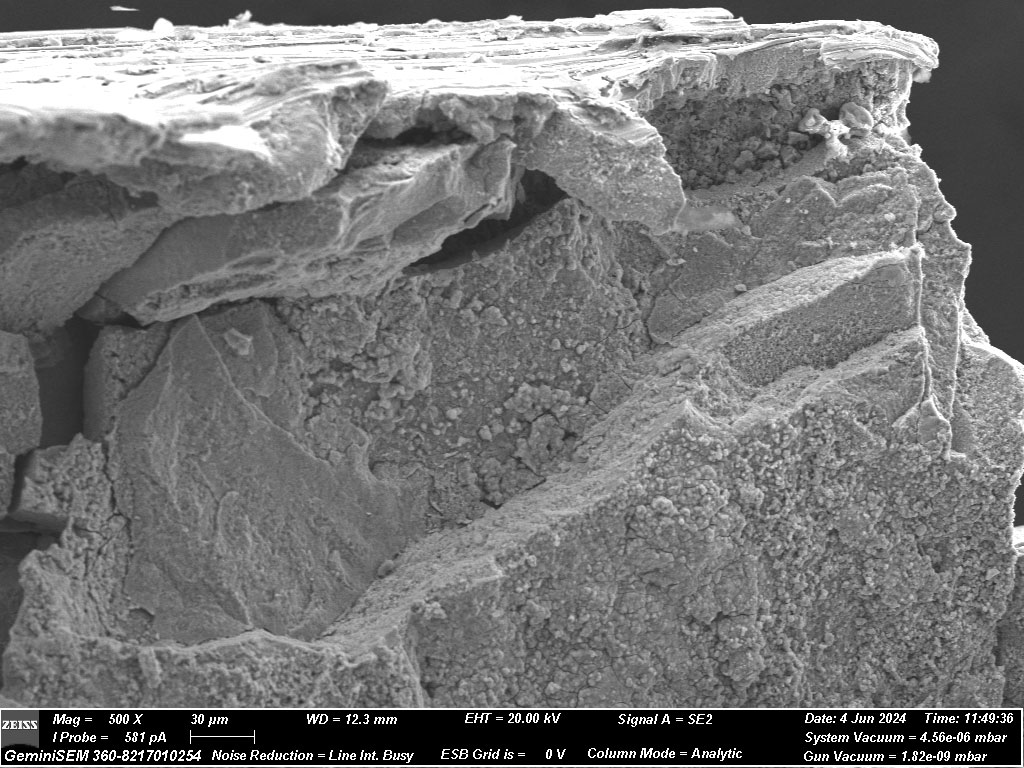
Microstructure Analysis – Polished/etched micrographs to identify phases (ferrite/pearlite/bainite/martensite), inclusions, precipitates, heat-affected zones, etc. (sample prep/etch per lab SOPs)
Grain Size – Quantitative grain size determination. (e.g., ASTM E112)
Case depth – Effective case depth measurement in case-hardened/carburized/nitrided parts. (e.g., microhardness traverse / etched profile)
Determination of delta ferrite content – Measurement/estimation of δ-ferrite in stainless/welds for hot-cracking and toughness control. (e.g., image analysis or ferrite scope, WRC charts)
Sensitization tests on welds – Screening for chromium-carbide precipitation at grain boundaries in stainless steels (risk of IGC). (e.g., oxalic acid etch screening per accepted practices)
Inclusion rating – Non-metallic inclusion content/type assessment for steel cleanliness. (e.g., ASTM E45 methods)
Decarb depth – Measurement of decarburized layer thickness below surface. (e.g., metallographic/microhardness methods)
Thin surface hardened steel – Microstructural verification of thin case layers to confirm hardening effectiveness without over-tempering.
Micro crack density – Counting/area-based quantification of microcracks in coatings/surfaces/HAZ to support life and reliability assessments.
Coating/ plating thickness – Thickness by microscopy cross-section or magnetic/electromagnetic gauges (as applicable). (e.g., microscopic cross-section, magnetic gauge methods)
Mass of Zn, Phosphate coatings – Gravimetric determination of coating mass per unit area for galvanized/phosphate-treated components (spec conformance). (per applicable product standards/specs)
Evaluation of weld joints — butt joint, fillet joint, hard facing, friction welds, stud welds, spot welds, projection welds and brazed joints – Macro/micro examination to verify bead profile, fusion, porosity, cracks, dilution, and HAZ condition; supports WPS/PQR/WQT and process validation.
Evaluation of quality of weld and calculating % depth of penetration – Measurement of penetration/leg size/throat and acceptance vs. project code/spec; macro-etch with calibrated image analysis.
Evaluation of Sensitization at welded regions of ferritic stainless steels – Check for grain-boundary precipitation/degradation in the weld/HAZ of ferritic grades. (see also intergranular tests below)
IGC test – Intergranular corrosion evaluation to confirm resistance or detect sensitization, especially in stainless steels. (e.g., ASTM A262 for austenitic SS; select practice per alloy and spec)
Detection of detrimental intermetallic phases by Method A and C in Duplex Stainless Steel – Duplex stainless steel screening for sigma/chi and other phases; etch plus corrosion method. (e.g., ASTM A923 Method A (etch) & Method C (corrosion))
Intergranular Attack in Ferritic Steel Practice W / Practice Z in Duplex Stainless Steel – Intergranular attack assessment:
Ferritic stainless steels: (e.g., ASTM A763 Practices W–Z, selected per grade/spec)
Duplex stainless steels: see ASTM A923 (as above)
Pitting Corrosion Test — Method A, Method C, Method E – Ferric chloride pitting tests/temperature thresholds (as specified for the alloy). (e.g., ASTM G48 Methods A/C/E, as applicable)
Crevice Corrosion Test — Method B, Method D, Method F – Crevice susceptibility/critical crevice temperature evaluation using ferric chloride with defined crevice formers. (e.g., ASTM G48 Methods B/D/F, as applicable)
Industries We Serve
No Industry found.